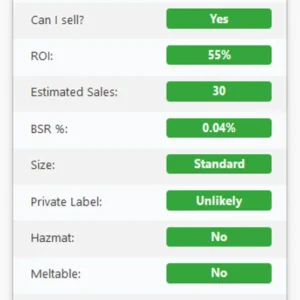
Retail arbitrage is the ultimate test of an Amazon seller’s speed and precision. You are standing in a crowded store aisle, scanning a clearance item, and your phone screen shows a potential goldmine. But in the high-stakes environment of 2026, a "good-looking" price difference is no longer enough to guarantee a profit.
The gap between a winning lead and a costly mistake often comes down to per-ASIN fee accuracy.
Between Amazon’s new fuel surcharges, varying regional VAT/Sales Tax, and the recent end of FBA prep services, manual "mental math" is a recipe for disaster. To scale, you need a repeatable, data-driven framework that eliminates the guesswork before you ever hit the checkout counter.
In this guide, we break down the exact framework used by top-tier sellers to evaluate retail arbitrage opportunities in seconds.
The Reality of Retail Arbitrage in 2026
Sourcing in-store is physically demanding. You are dealing with limited battery life, spotty Wi-Fi, and the pressure of finding inventory before another seller does. Many beginners fall into the trap of looking only at the "Buy Box price" minus the "store price."
This ignores the "Fee Stack": a collection of hidden costs that can easily consume 40% of your gross revenue.
To succeed, you must transition from "scanning for items" to "analyzing for profit." This requires arbitrage software that isn't just powerful, but also optimized for mobile use.
Step 1: Filter for Eligibility and Account Safety
Before you even look at the profit, you must know if you are allowed to sell the product. Sending restricted inventory to FBA is the fastest way to get your account flagged or suspended.
Brand Restrictions and Category Gating
Amazon has significantly tightened its grip on brand approvals. In 2026, most major brands in the beauty, grocery, and electronics categories require formal invoices from authorized distributors. Retail receipts are no longer accepted for ungating.
IP Alerts and Risk Factors
Even if you are "un-gated," certain brands are notorious for filing Intellectual Property (IP) complaints against resellers. These "private label" or aggressive brands can ruin your account health overnight.
The Framework Check:
- Is the brand known for IP complaints?
- Am I currently eligible to sell this ASIN?
- Is there a Hazmat or "Meltable" warning for this product?
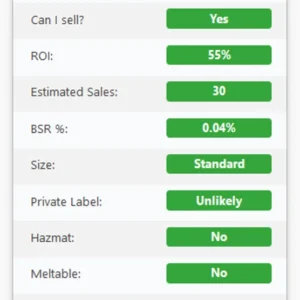
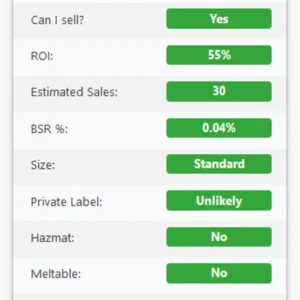
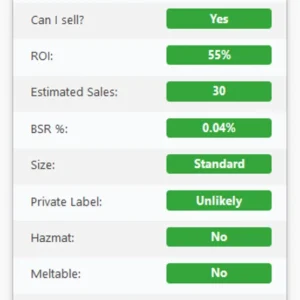
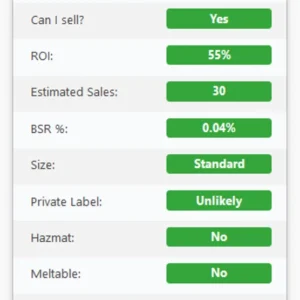
Using FBA Profit Guru’s automated alert system, these checks happen instantly. The tool flags potential IP risks and eligibility issues the moment you analyze an ASIN, saving you from buying "dead" inventory.

Step 2: Calculate the "Real" Cost Stack
Once eligibility is confirmed, you must calculate every penny associated with getting that product from the store shelf to the customer’s doorstep.
The Product Cost (COGS)
Your "Buy Price" is rarely just the sticker price.
- In the US/CA: You must include local sales tax unless you have a valid resale certificate.
- In the UK/EU: If you aren't VAT registered, the shelf price (VAT included) is your cost. If you are VAT registered, you can often reclaim the input VAT, making your net cost lower.
FBA Fulfillment and Referral Fees
These are the standard costs of doing business on Amazon. Referral fees typically hover around 15%, while fulfillment fees are based on the weight and dimensions of the item.
The "Hidden" Variable Fees
- Inbound Shipping: The cost to ship your goods to an Amazon fulfillment center (usually via a partnered carrier like UPS).
- Prep and Labeling: Since Amazon ended its internal prep services in early 2026, you must account for the cost of poly bags, bubble wrap, and your own labor (or 3PL fees).
- Storage Fees: Monthly storage costs fluctuate, especially during Q4. If a product has a slow sell-through rate, these fees will eat your margin.
The Framework Check:
You should target a minimum net margin of 20-25% to account for potential returns or price drops.

Step 3: Analyze Historical Stability (The "Anti-Race" Check)
A product that is profitable today might be a loss-maker by the time your inventory reaches the warehouse. Amazon deal analysis must include historical data to avoid the "race to the bottom."
BSR Trends
The Best Sellers Rank (BSR) tells you how fast the item sells. A low BSR is great, but you need to see if that rank is consistent or just a temporary spike.
Buy Box History
Has the price been stable for the last 90 days? If the current price is $29.99 but the 90-day average is $19.99, do not buy it. You are likely looking at a temporary price surge that won't last.
Competition Count
If the number of FBA sellers is skyrocketing, the price is likely to drop soon. Check the competition table to see who is holding the Buy Box and what their stock levels look like.

Step 4: Automate the Analysis on the Go
Manual calculation is the enemy of scaling. If it takes you 10 minutes to analyze one product, you will never find enough leads to build a high-six-figure business.
The FBA Profit Guru mobile interface is designed for the Retail Arbitrage environment. It consolidates every step of this framework into a single, high-contrast dashboard.
Why Automation Wins in Retail Arbitrage:
- Instant ROI Calculation: No more spreadsheets. Input your buy price and see your profit, ROI, and margin instantly.
- Integrated Keepa Charts: View price history and BSR trends without switching apps.
- Custom Criteria Filters: Set your own "Minimum Profit" and "Minimum ROI" thresholds. If a deal doesn't meet your criteria, the tool tells you immediately.
- VAT and Tax Handling: Automatically switches between marketplaces (UK, US, CA) and handles complex tax math based on your settings.
By using professional amazon fba product research tools, you spend less time "guessing" and more time "buying."

Summary: The 3-Minute RA Checklist
When you find a product, follow this exact sequence:
- Scan/Search ASIN: Check for green lights on eligibility and IP alerts.
- Verify Price History: Ensure the current Buy Box is at or below the 90-day average.
- Confirm the Math: Use an automated calculator to include prep, shipping, and VAT.
- Check Competition: Ensure you aren't entering a "race to the bottom" with 50 other FBA sellers.
Stop Guessing, Start Scaling
Retail arbitrage is a game of margins. In 2026, the winners are the sellers who have the best data at their fingertips while standing in the store.
Don't let hidden fees or unknown brand restrictions kill your Amazon business. Use a framework that prioritizes safety, accuracy, and speed.
Ready to eliminate the guesswork from your sourcing? Start your free trial of FBA Profit Guru today and turn your mobile device into a professional deal analysis powerhouse.