
You’ve found it. The "perfect" product.
The sales rank is low, the price looks stable, and on your rough math, you’re looking at a tidy £5 profit per unit. You pull the trigger, buy 50 units, and send them into the Amazon warehouse.
Two weeks later, the reality sets in.
After Amazon takes their referral fee, the FBA fulfillment fee, and the small-parcel delivery cost, that £5 profit has shriveled to 40p. Then, you get a dreaded Intellectual Property (IP) complaint from the brand owner. Your listing is deactivated, your inventory is stranded, and your account health is in the "At Risk" zone.
If this sounds familiar, you aren’t alone. In 2026, Amazon arbitrage and wholesale are more competitive than ever. Simple "back-of-the-napkin" math doesn't cut it anymore.
To scale safely, you need to move from guessing to analyzing. Let’s break down the most common deal analysis mistakes sellers make and how you can use FBA Profit Guru to avoid them.
1. The "Hidden Fee" Trap: Why Your Calculator is Lying to You
Most beginners only look at the buy price and the sell price. They forget that Amazon is a master of micro-transactions. If you aren't accounting for every single penny, you aren't running a business; you’re running a charity for Jeff Bezos.
The VAT Headache (UK Sellers)
If you are a UK-based seller, failing to account for VAT is the fastest way to go bankrupt. Whether you are on the Flat Rate Scheme or Standard VAT, that 20% (or your specific rate) must be factored into your net profit.
Size and Weight Tier Drift
Amazon often re-measures products. A product that was "Small Standard" yesterday might be "Large Standard" today because the packaging changed slightly. If your analysis is based on old data, your fulfillment fees will be higher than expected.
Inbound and Prep Costs
It costs money to get your goods to the warehouse. Whether it’s 30p per unit for a prep center or 50p per unit for your own boxes and labels, these inbound costs eat your margin.
The Solution: Stop using manual spreadsheets. Our automated profit & fee calculator breaks down every cost, including VAT, referral fees, and storage costs, so you see the true ROI before you spend a penny.

2. Ignoring the IP Minefield: Protecting Your Account Health
An IP complaint is the "silent killer" of Amazon accounts. Some brands are incredibly aggressive about who sells their products. If you jump onto a listing without checking the brand's history, you are playing Russian Roulette with your seller account.
Why Brands File IP Complaints
- Trademark Infringement: You’re using their name without a valid supply chain.
- Counterfeit Concerns: Even if your item is authentic, if you can’t prove the source with a wholesale invoice, Amazon side-steps the risk by siding with the brand.
- Parallel Import: Selling items in the UK that were meant for the US market.
How to Spot Risks Before You Buy
You need to look for patterns. Is there only one seller on the listing? That’s a red flag for a Private Label brand that will sue you. Is the seller count suddenly dropping from 20 to 2? That’s the sound of a brand's legal team clearing the deck.
The Solution: FBA Profit Guru includes a Real-Time IP Alert System. We cross-reference thousands of brands known for aggressive IP enforcement. If a brand has a history of filing complaints, we’ll show you a clear warning before you buy.

3. The "Keepa Trap": Looking at the Now, Not the History
A snapshot is not a story.
Looking at the current Buy Box price and assuming it will stay there is a rookie mistake. Prices on Amazon are volatile.
The Price Tanking Phenomenon
You see a product at £25 with a healthy margin. What you don't see is that 15 other sellers just bought the same lead from a sourcing group. In three days, the "race to the bottom" begins, and the price crashes to £18.
Seasonality Spikes
That heater might be selling for a 100% ROI in December, but if you buy it in February, you’ll be paying storage fees for the next nine months.
The Solution: You must check the BSR (Best Sellers Rank) and Price History. FBA Profit Guru integrates built-in charts that allow you to visualize 12 months of data instantly. If the price is unstable or the BSR is trending upward (meaning sales are slowing), our tool will flag it.

4. Eligibility and Gating: The "Stranded Inventory" Nightmare
There is nothing more frustrating than buying 100 units of a toy only to realize you are gated (restricted) from selling that brand or category.
Many sellers assume that if they can find the product on Amazon, they can sell it. Wrong. Restrictions can be applied at the:
- Category level (e.g., Topicals, Toys during Q4)
- Brand level (e.g., Nike, Lego, Disney)
- ASIN level (Specific hazardous or "meltable" items)
If you send restricted inventory to FBA, it becomes "Stranded Inventory." You’ll have to pay a removal fee to get it back, effectively doubling your losses.
The Pro Tip: Use the FBA Profit Guru Alert System. It performs an instant eligibility check to tell you if you are "Gated" or "Ungated" for a specific item while you are still on the supplier's website.

5. Misjudging Competition: Who are you fighting?
If a listing has 50 FBA sellers, your "estimated sales" are a fantasy.
You might see that a product sells 500 units a month. You think, "Great, I'll take a piece of that!" But if there are 45 other sellers at the same price point, and Amazon is one of them, your share of the Buy Box might be close to zero.
Red Flags in Competition Analysis:
- Amazon is a Seller: Amazon rarely shares the Buy Box. If they are in stock and your price isn't significantly lower, you won't get sales.
- The "Price War" Indicator: If you see sellers with 1-2 units in stock constantly dropping the price by 1p, it's a sign of a low-quality listing that will likely tank soon.
The Solution: Use our Competition Analysis feature. It shows you exactly who is on the listing, their stock levels, and their Buy Box win percentage. This allows you to calculate a realistic sales velocity for your specific share of the pie.

How to Build a Fail-Proof Analysis Workflow
Success in Amazon Arbitrage isn't about working harder; it's about automating the boring stuff so you can focus on the big wins.
Here is the checklist our most successful users follow:
- Set Your Minimums: Define your minimum ROI (e.g., 25%) and minimum profit (e.g., £3) in your FBA Profit Guru settings.
- Verify History: Never buy a "spike." Ensure the price has been stable for at least 30 days.
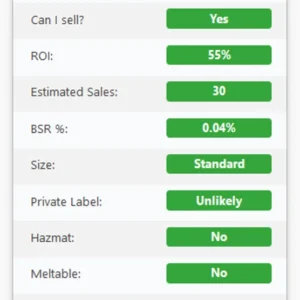
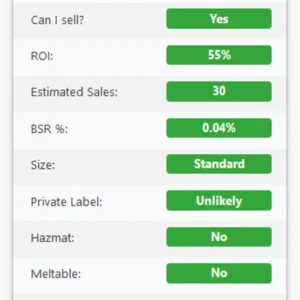
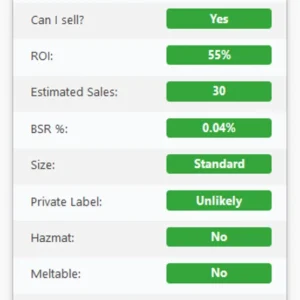
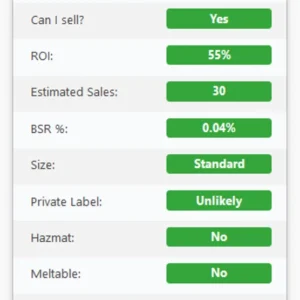
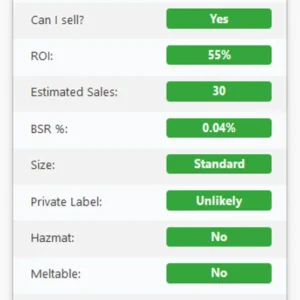
- Check the Risks: Look at the IP Alert and Hazmat status. If there's a red flag, move on. There are millions of other products.
- Verify Net Profit: Ensure VAT and inbound shipping are accounted for.
- Go Deep or Wide?: If it’s a new brand, go "wide" (buy 5-10 units) to test the waters. If it’s a proven winner, go "deep."
Ready to Stop Guessing?
The difference between a "hobby" seller and a "pro" seller is the tools they use. Don't let a simple math error or a hidden IP risk destroy months of hard work.
Start your journey with FBA Profit Guru today and get instant access to the deal analysis tools that the pros use to scale to 6 and 7 figures.
Eliminate the guesswork. Minimize the risk. Maximize your profit.