Starting an Amazon Arbitrage business in 2026 is one of the fastest ways to generate cash flow, but it is also a minefield for the unprepared. You find a product, the ROI looks incredible, and you’re ready to ship it to the warehouse: only to realize two weeks later that your listing has been deactivated due to an Intellectual Property (IP) claim.
Worse still, you might find yourself gated after you’ve already purchased 100 units of stock. These aren't just minor inconveniences; they are "business-killers" that can lead to permanent account suspension if not handled correctly.
To scale safely in the US, UK, and CA markets, you must move beyond basic "manual" sourcing and adopt a data-driven strategy. This guide breaks down the critical differences between brand restrictions and IP alerts and shows you how to automate your risk assessment to safeguard your profits.
The Difference Between Gated Brands and IP Alerts
Many beginners confuse these two concepts, but they are fundamentally different risks.
Brand Restrictions (Gating) are Amazon’s way of ensuring quality control. When a brand or category is gated, Amazon literally prevents you from creating a listing unless you provide wholesale invoices or a letter of authorization. You’ll see a "Request Approval" button in Seller Central.
IP Alerts, however, are far more dangerous. You might be "ungated" (eligible to sell) in a brand, but that brand may have a history of aggressively filing legal complaints against third-party sellers. These brands use Amazon Brand Registry tools to report sellers for trademark or copyright infringement, often claiming your items are inauthentic even if they are genuine.
If you ignore these warnings, you risk a "red" hit on your Account Health Dashboard, which is the fastest way to lose your selling privileges.
The Hidden Danger: Why IP Alerts Can Kill Your Account
In 2026, brands are more protective of their digital presence than ever. They don't want "arbitrageurs" fluctuating their prices or creating a "race to the bottom" that devalues their brand equity.
When a brand files an IP complaint, Amazon’s automated systems usually side with the brand first and ask questions later. To fight these, you need:
- Proof of Authenticity: Valid invoices from reputable retailers or distributors.
- Letter of Authorization (LOA): Rarely available for OA/RA sellers.
- Time and Effort: Appeals can take weeks, during which your capital is tied up in "stranded" inventory.
Instead of fighting fires, you should be preventing them. Using an automated deal analysis tool allows you to see these "invisible" risks before you spend a single dollar on inventory.
How to Spot Risks Before You Buy (The FBA Profit Guru Way)
Manual research is not only slow; it’s prone to human error. If you are manually checking every brand against a PDF list of "bad brands," you are wasting hours every day and still missing new alerts.
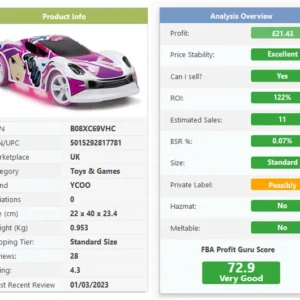
Our software provides instant visibility into these risks directly on the product page.

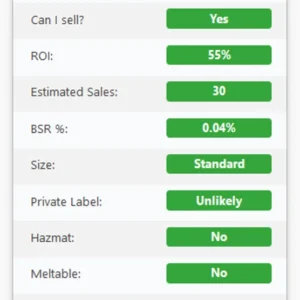
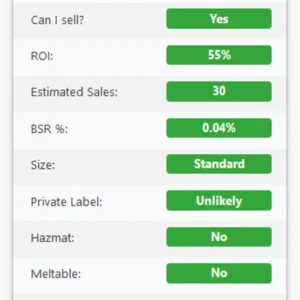
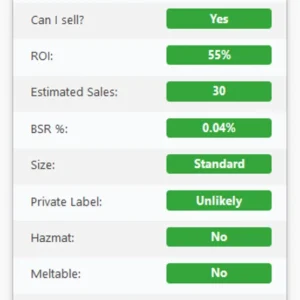
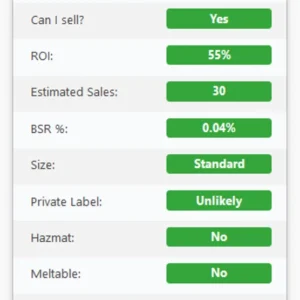
When you analyze a deal, you should be looking for a "clean" bill of health across five key areas:
- Eligibility: Are you actually allowed to sell this? (Ungated).
- Private Label Check: Is the brand the only seller? If so, an IP claim is 100% guaranteed.
- IP Check: Does the brand have a history of reporting sellers?
- Hazmat/Meltable: Are there shipping restrictions that will eat into your margins?
- BSR Stability: Is the demand consistent enough to justify the risk?
By streamlining your product research, you shift your focus from "hoping it works" to "knowing it’s safe."
Navigating UK-Specific Challenges: VAT and Local Gating
For our UK and EU sellers, the complexity increases. You aren't just dealing with IP alerts; you're dealing with VAT considerations that can flip a "profitable" deal into a loss.
If you are a VAT-registered seller, you must account for the 20% output tax on your sales. If you are not registered, you must still be aware of the threshold and how it impacts your breakeven point. A deal that looks like a 30% ROI in the US might be a 10% ROI in the UK once you factor in VAT and higher shipping costs.
Furthermore, gating can vary by region. A brand like Nike might be easy to ungate in the US but notoriously difficult in the UK. Always ensure your Amazon deal analysis is set to the correct marketplace to get accurate data.
The Step-by-Step Sourcing Workflow for 2026
To maximize efficiency and minimize risk, follow this exact workflow for every Online Arbitrage or Wholesale deal:
- Verify Eligibility First: Don't waste time looking at the numbers if you are gated.
- Check the "Risk Radar": Look for red flags. If the IP alert is red, walk away. There are millions of other products; don't gamble your account.
- Analyze Competition & Price History: Use built-in Keepa charts to see if Amazon is on the listing. If Amazon is a seller and they never share the Buy Box, your stock will sit in the warehouse forever.
- Calculate Real Profit: Use a detailed profit calculator that includes VAT, sales tax, and FBA fees.
- Check "Guru Score": Use an aggregated score to see if the deal meets your custom criteria (e.g., Minimum $3 profit and 20% ROI).

Manual Analysis vs. Software: Why Speed Wins
The Amazon marketplace moves fast. In the time it takes you to manually calculate the fees and check the IP history for one product, a software-led seller has already analyzed twenty.
Manual sourcing leads to "Analysis Paralysis." You get overwhelmed by the data and either make a rash decision or buy nothing at all. Automation eliminates the guesswork by presenting the data in a clear, actionable format.
By using FBA Profit Guru, you can filter out the "noise" and only see the deals that meet your exact risk tolerance and profit goals. This isn't just about saving time; it's about protecting your capital from bad buys and price tanking.
Conclusion: Don't Let One Bad Deal Tank Your Business
IP alerts and brand restrictions are part of the Amazon landscape, but they don't have to be a threat to your business. By using the right tools and following a structured sourcing process, you can navigate these pitfalls with ease.
Stop guessing and start analyzing. If you want to scale your Amazon business safely in 2026, you need a partner that watches your back.
Start your free trial of FBA Profit Guru today and see exactly which brands to avoid before you buy.