
In the world of Amazon FBA, the landscape has shifted. If you’re still sourcing products the same way sellers did in 2018, you’re likely leaving thousands of dollars on the table: or worse, risking your entire account on bad data.
By 2026, the "Wild West" days of scanning a barcode and hoping for the best are over. Whether you are tackling Online Arbitrage (OA) from your laptop or hitting the aisles for Retail Arbitrage (RA), the fundamental question remains: should you do the heavy lifting manually, or is it time to let software take the wheel?
Success in the USA, UK, and CA markets now requires more than just a "gut feeling." It requires precision. In this guide, we’ll break down the pros and cons of manual analysis versus software-led research and why your choice will determine your scalability this year.
The Reality of Manual Sourcing: The Beginner’s Gamble
Manual sourcing is exactly what it sounds like. You find a product at a retailer like Walmart, Target, or Argos, and you manually compare it to the Amazon listing. You use a basic calculator, check the current "New" price, and subtract your buy price.
The Pros:
- Low Entry Cost: It costs nothing but your time.
- Fundamental Learning: You learn the "why" behind Amazon fees and Best Sellers Rank (BSR) by calculating them yourself.
- Hidden Gems: Sometimes, manual browsing helps you find clearance items that haven't been picked up by bulk scanners yet.
The Cons:
- The "Slow" Factor: You might spend 30 minutes analyzing one product only to realize you’re gated or the ROI is 2%.
- Inaccurate Data: Humans are prone to error. Did you remember to factor in the UK VAT? Did you include the inbound shipping costs or the Amazon referral fee?
- Zero Historical Context: A manual check only shows you a "snapshot" in time. You see the price today, but you have no idea if that price is a 24-hour spike or a stable average.
Manual analysis is a great way to start if you have a budget of $100 and a lot of free time. But if you want to turn this into a professional business, you cannot scale a "manual-only" model.
Software-Led Analysis: The Competitive Edge
When you switch to a tool like FBA Profit Guru, you aren't just buying a calculator; you’re buying an automated risk-mitigation system. Software allows you to process data in seconds that would take a human hours to compile.

1. Speed and Scalability
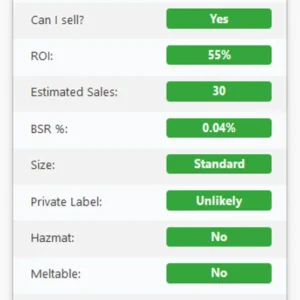
Instead of jumping between tabs and cross-referencing three different sites, software provides an instant visibility into profit, ROI, and estimated sales. When you’re scanning 50 leads a day, saving 5 minutes per lead adds up to over 4 hours of your life back: every single day.
2. Built-in Keepa Integration
One of the biggest mistakes sellers make is buying a product based on today’s high price, only to have the price crash by the time their inventory hits the warehouse. This is the "race to the bottom."
By using built-in Keepa charts, you can see 12 months of sales rank and price history. If a product is currently £30 but has averaged £18 for the last year, software will flag that as a high-risk buy.

3. Eligibility and Safety Alerts
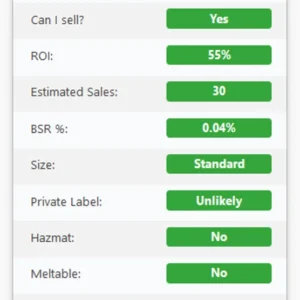
Are you allowed to sell that brand? Is the product Hazmat? Is it Meltable?
Manual sellers often realize they are "gated" (restricted) only after they’ve bought the stock. Software provides real-time checks for brand restrictions and IP alerts. Avoiding just one IP Complaint (Intellectual Property) can save your Amazon account from suspension.
Tackling Global Complexity: VAT and Sales Tax
For sellers in the UK, VAT is the silent profit killer. Many manual calculators fail to account for the difference between gross and net profit when VAT is involved.
FBA Profit Guru handles these regional nuances automatically. Whether you’re dealing with UK VAT or US Sales Tax, the software calculates your Breakeven Point and Margin Analysis with surgical precision.

You need to know your "Total Cost" before you spend a single penny. This includes:
- Buy Price + Tax/VAT
- Amazon Referral Fees
- FBA Pick & Pack Fees
- Inbound Shipping
If you are guessing these numbers, you aren't a business owner: you're a gambler.
Avoiding the "Race to the Bottom" with Data
The "race to the bottom" happens when dozens of sellers jump on the same "hot" lead, and everyone starts dropping their price by $0.01 to win the Buy Box.
Software helps you avoid this by showing you the Competition Analysis. You can see exactly how many FBA and FBM offers are on a listing and, more importantly, what their stock levels are. If a listing has 20 sellers but they only have 1 unit each, the price is likely to hold. If 5 sellers have 500 units each, stay away!

Why "FBA Profit Guru" is the Hybrid Solution
We designed our platform to eliminate the "guesswork" that plagues manual sourcing while keeping the interface as simple as a basic calculator.
By setting your own Custom Criteria, you can tell the software: "Only show me deals with a minimum 30% ROI and at least 20 sales per month."
The tool then acts as a filter. If a product doesn't meet your "Guru Score" requirements, you move on immediately. You aren't wasting time analyzing "dud" products.
Key Features for 2026 Sellers:
- Profit & Fee Calculator: Accurate breakdowns including all hidden fees.
- IP & Private Label Alerts: Know which brands are "litigious" before you buy.
- Historical Averages: 7-day, 30-day, and 90-day BSR/Price trends.
- Wishlist System: Save your best leads to review and purchase later.
The Verdict: Manual vs. Software
| Feature | Manual Analysis | FBA Profit Guru Software |
|---|---|---|
| Speed | 5-10 minutes per ASIN | < 5 seconds per ASIN |
| Accuracy | High risk of human error | Data-driven & Precise |
| Risk Management | Guesswork on IP/Hazmat | Automated Alerts |
| Price History | Current price only | 12 months of Keepa data |
| Scalability | Limited by your hours | Unlimited |
If you are serious about growing your Amazon FBA business, manual analysis is a bottleneck. To move from a "side hustle" to a "revenue engine," you need tools that provide simplicity, automation, and speed.
Ready to stop guessing and start growing? Check out our Beginner's Guide to Amazon Arbitrage or jump straight into the data.
Streamline your sourcing today. Get started with FBA Profit Guru and eliminate the risk of costly mistakes.