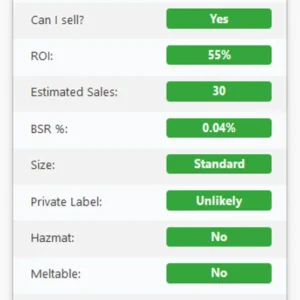
Analysis paralysis is the silent killer of Amazon FBA businesses.
If you spend thirty minutes manually calculating fees, checking Keepa charts, and searching for IP alerts for every single product, you are losing money. While you are busy with your spreadsheet, another seller has already used automation to find, analyze, and buy the stock.
To scale in 2026, you need a repeatable, data-driven framework that tells you "Yes" or "No" in under five minutes. Whether you are doing Retail Arbitrage (RA), Online Arbitrage (OA), or Wholesale in the US, UK, or Canada, the rules of the game have changed.
This guide will show you how to streamline your analysis using FBA Profit Guru and Keepa to maximize your ROI while minimizing risk.
The Cost of Manual Analysis vs. Software Automation
Many beginners start by using the free Amazon Revenue Calculator. While it's a "free" tool, it costs you hours of manual data entry.
Manual analysis is prone to human error: forgetting to account for UK VAT, missing a sudden spike in the Best Sellers Rank (BSR), or overlooking a brand known for filing Intellectual Property (IP) complaints.
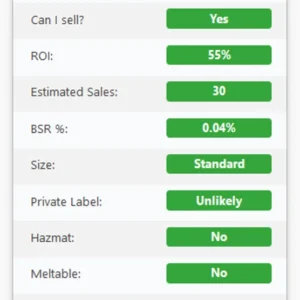
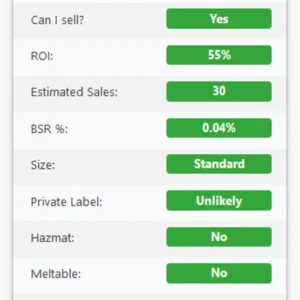
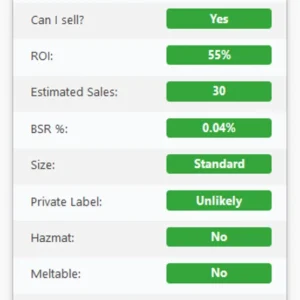
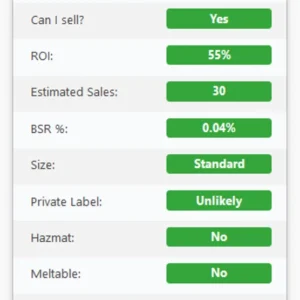
By switching to a software-led analysis, you consolidate these data points into a single dashboard. You stop guessing and start operating on hard data.
Step 1: The "No-Go" Filter (Eligibility & IP Alerts)
Before you look at profit, you must confirm you can actually sell the product. There is no point in finding a 100% ROI deal if you are gated or if the brand will hit you with an IP claim the moment your stock hits the warehouse.
Check Your Eligibility
Amazon "gates" certain brands and categories to ensure quality. Use an automated tool to instantly check if you are "Eligible" or "Gated" for a specific ASIN. If you see a red "Gated" status, move on immediately unless you have the invoices ready for an un-gating application.
Identify IP Risks
IP complaints are the fastest way to get your Amazon account suspended. Some brands are "IP-aggressive," meaning they do not allow any third-party resellers.
FBA Profit Guru provides a real-time Alert System that flags brands with a history of filing complaints. If a product is flagged as a "Private Label" risk or has "IP Alerts," it is usually a pass. Protecting your account health is more important than a single profitable lead.

Step 2: Read the Keepa "Truth" (Price & Sales Rank)
The current price on Amazon is a snapshot in time: it is not the whole story. To avoid the "race to the bottom," you must look at historical data.
Analyze the Price Stability
Is the price currently at an all-time high? If so, it will likely drop back to its average soon. Look at the 90-day average price rather than the current Buy Box price.
- If the current price is £25 but the 90-day average is £18, calculate your profit based on £18.
- This protects you from buying into a "price spike" that disappears before your stock arrives.
Verify Sales Velocity (The Zig-Zag)
A low BSR (Best Sellers Rank) is good, but a consistent BSR is better. In a Keepa chart, look for frequent "drops" in the green line. Each drop represents at least one sale.
- A flat line means the product isn't moving.
- A wild, zig-zagging line means consistent demand.

Step 3: Crunch the Numbers (UK VAT & Fee Calculation)
Profit is what's left after everyone else gets paid. In 2026, you cannot afford to ignore the "hidden" costs of FBA.
The UK VAT Trap
For UK sellers, VAT is the biggest complexity. If you are not VAT registered, you must include the 20% VAT you pay at the retailer as part of your "Buy Price." If you are VAT registered, you need to account for the VAT on the sale price that you owe to HMRC.
FBA Profit Guru’s VAT-inclusive guide explains this in detail, but your analysis tool should handle the math for you automatically.
The Profit & Fee Breakdown
Your analysis must include:
- FBA Fulfillment Fees: Based on the product's weight and dimensions.
- Referral Fees: Typically 15% of the sale price.
- Inbound Shipping: The cost to send your box to Amazon (e.g., £0.15/kg).
- Prep Costs: If you use a prep center, add £0.50–£1.00 per unit.
Target Metrics for 2026:
- Minimum ROI: 30% (to allow room for price fluctuations).
- Minimum Profit: £3.00 / $3.00 per unit.

Step 4: Competition & Buy Box Analysis
You aren't selling in a vacuum. You need to know who you are up against.
Is Amazon on the Listing?
If Amazon is a seller and they hold the Buy Box 100% of the time, stay away. You cannot compete with Amazon on their own platform. However, if Keepa shows that Amazon shares the Buy Box or frequently goes out of stock, it might still be a viable deal.
Offer Count Trends
Look at the number of FBA sellers. If the seller count has jumped from 5 to 50 in the last two weeks, a "price war" is imminent. When supply exceeds demand, the price crashes. You want listings with stable or declining competition.

Step 5: The "Guru Score" Decision
After reviewing the data, you need to make a fast decision. To streamline this, we use a scoring system.
A "Good" deal isn't just about high ROI; it’s a combination of:
- High Sales Velocity (Low BSR).
- High Price Stability (Consistent Keepa history).
- Low Risk (No IP alerts or Hazmat issues).
- Healthy Margins (After all taxes and fees).
If a deal checks all these boxes, buy it. If it fails even one: especially the IP check: move on. There are thousands of other products waiting to be found.
Summary: Your 5-Minute Checklist
To master Amazon product research, follow this workflow:
- Scan/Search: Input the ASIN or scan the barcode.
- Filter: Check Eligibility and IP Alerts (10 seconds).
- Analyze History: Review 90-day Keepa price and BSR (60 seconds).
- Calculate: Input your buy price and check the net profit/ROI (30 seconds).
- Verify Competition: Check seller count and Amazon’s presence (30 seconds).
- Decide: Execute the buy or move to the next lead.
By automating the heavy lifting, you can analyze 50 deals in the time it used to take to analyze five. Speed is your greatest competitive advantage.
Stop Guessing. Start Profiting.
Ready to eliminate the guesswork and scale your Amazon business? FBA Profit Guru provides the all-in-one analysis tool you need to find winning deals in the US and UK markets.
Start your free trial today and analyze your first deal in seconds.