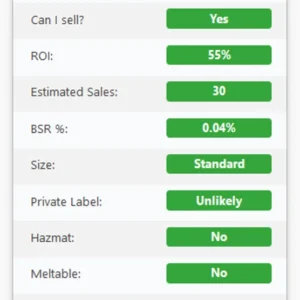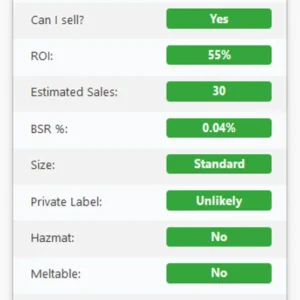
You found a "killer" deal. The ROI is 60%, the sales rank is in the top 1%, and the profit looks juicy on your spreadsheet. You buy 50 units, send them to the FBA warehouse, and wait for the "cha-ching" of sales.
Then it happens.
Within 48 hours of your stock hitting the shelf, five other sellers jump on the listing. The price drops by £2. Then £5. Suddenly, you’re not just losing profit, you’re losing money on every sale. Welcome to the Race to the Bottom.
The truth is, most Amazon deal analysis fails because it’s based on a "snapshot in time" rather than a deep dive into data. If you want to survive in 2026, you need to stop guessing and start analyzing like a pro.
Here are the 10 reasons your deal analysis is failing and exactly how to fix it.
1. You’re Chasing the Current Price, Not the History
The biggest mistake beginners make? Looking at the Current Buy Box Price and assuming it will stay there forever.
If a product is currently selling for £30 but has historically sat at £22 for the last six months, your "profitable" deal is actually a ticking time bomb. As soon as the temporary stock shortage ends, that price will crash back down.
The Fix: Always check the 90-day and 12-month price history. Tools like FBA Profit Guru integrate built-in charts that show you the Price Stability over time. If the "Average Price" doesn't support your ROI, walk away.

2. Ignoring the "Amazon is on the Listing" Red Flag
Are you trying to compete with a giant? If Amazon is a seller on the listing, you are playing on hard mode. Amazon can (and will) hold the Buy Box even if you undercut them by a few pennies. More importantly, they have infinite stock and no "buy cost" in the traditional sense.
The Fix: Check the Amazon Selling Status. If Amazon has held the Buy Box for more than 70% of the last 90 days, it’s usually a "no-go" for arbitrage. Look for listings where Amazon is out of stock or shares the Buy Box frequently.
3. The UK VAT Blunder: Gross vs. Net
For UK sellers, VAT is the silent profit killer. If you are VAT registered and your analysis tool isn't accounting for the difference between Gross and Net margins, you’re flying blind.
Many sellers forget to account for the VAT on the Amazon referral and FBA fees, or they fail to properly calculate the "VAT on Sales" they owe to HMRC.
The Fix: Use a tool that allows you to toggle your VAT status. Whether you are on the Flat Rate Scheme, Standard Rate, or not registered at all, your tool must calculate your Net Profit after tax, not just your gross margin.

4. Missing the IP Alert and Brand Restrictions
Nothing kills a business faster than an IP (Intellectual Property) Complaint. Some brands are notoriously aggressive about protecting their listings. If you buy 100 units of a brand that doesn't allow third-party sellers, you'll end up with "stranded inventory" and a potential account suspension.
The Fix: You need a real-time IP Alert system. FBA Profit Guru provides instant visibility into brand restrictions and known IP offenders. If a "Private Label" flag or "IP Alert" pops up, do not buy the product.
5. Overestimating Your Share of Sales
A product might sell 300 times a month, but that doesn't mean you will sell 300 units. If there are 10 other FBA sellers at the same price point, you’re likely only getting 10% of those sales (30 units).
If you buy 100 units based on the total sales volume, you’ll be sitting on 70 units of "dead stock" that will eventually force you to lower your price to recover capital.
The Fix: Look at the Competition Analysis. Check how many FBA sellers are within 2-3% of the Buy Box price. Divide the estimated monthly sales by the number of competitive sellers to find your realistic "Sell-Through Rate."

6. Not Factoring in "Hidden" Logistics Costs
Profit isn't just Sell Price - Buy Price - Amazon Fees. It’s also:
- Inbound Shipping: The cost to get your items to Amazon (per kg/lb).
- Prep Costs: Bubble wrap, poly bags, and labels.
- Returns & Damages: A realistic 1-3% "buffer" for items that come back broken.
The Fix: Stop using "napkin math." Your analysis dashboard should include a dedicated section for Prep and Shipping fees. If your profit margin is so thin that a 50p shipping cost destroys it, the deal isn't strong enough.
7. Falling for the "BSR Snapshot" Trap
The Best Sellers Rank (BSR) is a heartbeat, not a constant. A product might have a BSR of 5,000 today because it just had a huge sale, but its average BSR might be 50,000.
If you buy based on today’s rank, you are buying based on a temporary spike.
The Fix: Look for BSR Consistency. A steady, low BSR over 90 days is far more valuable than a "1% rank" that only lasts for a week.
8. Manual Analysis is Too Slow
In the world of Online Arbitrage (OA), speed is everything. If you are manually copy-pasting data into a spreadsheet, the lead will be gone by the time you finish. By the time you decide to buy, 20 other sellers have already cleared the shelves, ensuring a race to the bottom before your stock even arrives.
The Fix: Automate the workflow. Use a deal analysis overlay that gives you a "Guru Score" instantly. If the software flags a deal as "Excellent" based on your custom criteria (ROI, Profit, Sales), pull the trigger immediately.

9. Lack of Custom "Minimum Criteria"
Most sellers get "deal fever." They see a product they like and try to justify the purchase, even if the numbers are marginal. "Well, it's only 15% ROI, but it sells fast!"
This is how you go broke. Marginal deals have zero "buffer" for price drops.
The Fix: Define your Hard Minimums.
- Minimum ROI: (e.g., 30%)
- Minimum Profit: (e.g., £3.00)
- Minimum Monthly Sales: (e.g., 20 units)
Set these in your custom settings. If the software doesn't give it a green light, don't buy it. Period.
10. Ignoring Seasonal and "Meltable" Constraints
Shipping chocolate in July? Sending Christmas decorations to FBA in February? These are rookie errors that lead to suppressed listings or destroyed inventory. Amazon has strict windows for Meltable goods (typically Oct 15 – April 30 in the US), and failing to check this can lead to total stock loss.
The Fix: Check for Hazmat and Meltable alerts on every single deal. A good analysis tool will flag these restrictions automatically so you don't have to memorize Amazon's ever-changing policy calendar.
How to Beat the Race to the Bottom
The "Race to the Bottom" happens when sellers don't have a strategy. They see the price drop, panic, and lower their price to "get the next sale."
To win, you must buy better. When you use data-driven analysis to find "high-moat" deals: products with stable prices, low competition, and no Amazon presence: you don't have to race. You can sit at your target price and wait for the "panic sellers" to sell out, leaving you with the Buy Box and the profit.
Stop Guessing. Start Scaling.
Manual deal analysis is the "slow lane" to Amazon success. If you want to scale to 5 or 6 figures, you need a system that eliminates human error and spots risks before they cost you money.
Ready to streamline your business?
Try FBA Profit Guru today and get instant, accurate ROI, VAT, and risk insights for every deal. Stop the guesswork and start building a profitable Amazon empire.