
Choosing between Online Arbitrage (OA) and Wholesale is the most critical decision an Amazon seller faces. One offers a low-cost entry point with fast returns, while the other provides a scalable, long-term foundation for a seven-figure brand.
In 2026, the Amazon marketplace is more competitive than ever. Relying on "gut feelings" or manual spreadsheets is a recipe for failure. Whether you are hunting for individual flips or negotiating bulk contracts, your success depends on one thing: data-driven deal analysis.
This guide breaks down the mechanics, pros, and cons of both models and explains how to use FBA Profit Guru to dominate whichever path you choose.
What is Online Arbitrage (OA)?
Online Arbitrage is the art of buying products from retail websites (like Walmart, Argos, or specialized online stores) and reselling them on Amazon for a profit.
It is the ultimate "low-friction" business model. You don't need a warehouse, you don't need to sign complex contracts, and you can start with as little as £500.
The Mechanics of OA
- The Hunt: You spend your time scanning retail sites for clearance deals, mispriced items, or high-demand products that are cheaper elsewhere.
- The Analysis: You check the current Amazon price, subtract fees, and calculate your Return on Investment (ROI).
- The Flip: You buy 5, 10, or 20 units, ship them to an Amazon FBA prep center, and wait for the "Sold, ship now" notification.
What is Wholesale FBA?
Wholesale involves buying branded products in bulk directly from the manufacturer or an authorized distributor. Unlike OA, where you are a "customer" of a retail store, in Wholesale, you are a business partner of a supplier.
The Mechanics of Wholesale
- The Relationship: You apply for a wholesale account, prove you are a legitimate business (usually requiring a VAT number or LLC), and gain access to their price lists.
- The Manifesto: Suppliers send you "manifestos", huge spreadsheets with thousands of products.
- The Scale: You don't buy 5 units; you buy 500. You aren't looking for a one-time flip; you are looking for replenishable inventory that sells month after month.

Comparison: Online Arbitrage vs. Wholesale
To decide which is better for your business, you need to look at the metrics that matter: capital, time, and scalability.
| Factor | Online Arbitrage (OA) | Wholesale |
|---|---|---|
| Startup Capital | Low (£500 – £2,000) | High (£2,000 – £10,000+) |
| Complexity | Simple; anyone can start. | High; requires business registration. |
| Scalability | Limited by sourcing time. | High; reorders are automated. |
| Profit Margins | 10% – 20% (Typical) | 20% – 40% (on good accounts) |
| Risk Level | Low (Small bets on many SKUs). | High (Large bets on fewer SKUs). |
The Case for Online Arbitrage
The primary advantage of OA is speed. You can find a deal today, have it at a prep center tomorrow, and see a profit within two weeks. It is the best way to learn the "Amazon ecosystem", handling fees, understanding Keepa charts, and managing the Buy Box.
The Downside: It is a "hamster wheel." If you stop sourcing, your business stops. You are constantly fighting other OA sellers for the same limited retail stock.
The Case for Wholesale
Wholesale is a real asset. Once you secure a contract with a brand, you have a "moat" around your business. You aren't hunting for deals; you are placing reorders. It is significantly more efficient and allows for massive revenue growth without a proportional increase in work hours.
The Downside: The barrier to entry is higher. Brands are picky about who they work with, and miscalculating demand on a 1,000-unit order can tie up your capital for months.
How FBA Profit Guru Bridges the Gap
Regardless of which model you choose, the "Research Phase" is where you either make money or lose it. FBA Profit Guru is designed to streamline this process for both OA hunters and Wholesale moguls.
1. For the OA Seller: Instant Deal Validation
When doing Online Arbitrage, you need to move fast. If a deal is good, it will sell out quickly.
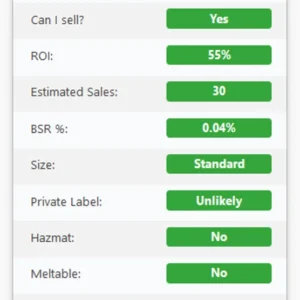
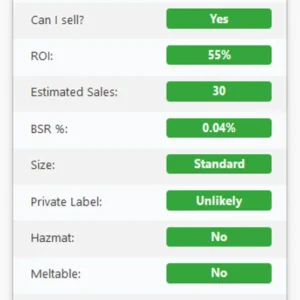
Our tool provides an Instant Deal Analysis Overview, giving you visibility into:
- Net Profit & ROI: Don't guess. Know your margin after every single fee.
- BSR Trends: Is the product actually selling, or is the price high because nobody is buying?
- Competition: How many other FBA sellers are on the listing?

2. For the Wholesale Seller: Manifesto Mastery
Evaluating a wholesale manifesto with 5,000 rows is a nightmare, unless you have the right tech. FBA Profit Guru allows you to identify profitable items quickly by focusing on Custom Criteria Settings.
You can set your minimum profit, ROI, and sales thresholds. The tool then filters the data, allowing you to ignore the junk and focus only on the "gold" in the supplier's list.
3. Risk Management: The Safety Net
Both models face the same "deadly" risks: IP Alerts, Hazmat status, and Brand Restrictions.
- IP Alerts: Imagine buying £5,000 worth of wholesale stock only to get an Intellectual Property claim from the brand on day one. Our system provides real-time alerts to prevent this.
- Eligibility Checks: Our tool tells you instantly if you are "Gated" (restricted) in a brand or category before you commit capital.

Which One Should You Choose?
The Beginner's Roadmap (Starting with < £2,000)
If you are just starting, choose Online Arbitrage.
The goal isn't to stay in OA forever; the goal is to build capital and data. Use OA to find brands that sell well. Once you've sold 100 units of a brand through OA, you have the data to approach that brand for a wholesale account.
The Scaler's Roadmap (Capital > £5,000)
If you have the funds and want to build a business that runs without you, choose Wholesale.
Focus on building 5–10 solid supplier relationships. Use FBA Profit Guru to analyze their weekly stock lists and identify evergreen products that you can reorder with a single click.
Why Data is Your Only Competitive Advantage
In 2026, "working hard" isn't enough. Every successful seller is using automation. If you are manually calculating VAT or guessing at the historical BSR, you are already behind.
FBA Profit Guru eliminates the guesswork. It turns a 4-hour research session into a 15-minute verification process.
Key Features to Look For:
- Keepa Integration: Built-in charts to see 12-month price stability.
- Automated Fee Calculator: Including VAT, sales tax, and FBA storage fees.
- Guru Score: A proprietary rating system that tells you at a glance if a deal is "Excellent" or "Poor."

Conclusion: It's Not "Or," It's "When"
Most elite Amazon sellers don't choose just one. They use a Hybrid Model.
They have a stable "floor" of wholesale income that pays the bills and covers overhead. Then, they use Online Arbitrage to find high-ROI "burst" deals that inject extra cash into the business.
The common thread between both? The Tools.
Whether you are scanning a clearance rack or a wholesale manifesto, you cannot afford to be wrong. Use a professional product analysis tool to protect your margins and scale your business with confidence.
Ready to stop guessing and start growing?
Sign up for FBA Profit Guru today and take the guesswork out of your Amazon FBA research.
Frequently Asked Questions
- Do I need a business license for OA? Not strictly required to start, but recommended as you grow.
- Can I do Wholesale from home? Yes, as long as you use a prep center to receive and ship your bulk orders.
- Is FBA Profit Guru good for UK sellers? Absolutely. We provide full VAT and UK-specific marketplace analysis. Check our FAQ for more details.