
In the hyper-competitive landscape of 2026, the question isn't whether you should track prices, but whether you can afford to survive without it.
For Amazon sellers in the USA and UK, the days of "gut-feeling" sourcing are officially over. If you aren't looking at the historical narrative of a product, you aren't investing: you're gambling.
The market has shifted toward extreme price transparency. With Amazon now offering customers 365-day price history in both the US and UK marketplaces, your buyers are smarter than ever. To stay profitable, your data needs to be even smarter.
The "Static Pricing" Trap: Why a Snapshot Is a Lie
Most beginners make the mistake of looking at the current Buy Box price and assuming that’s the reality. It’s a snapshot, and in the world of Amazon FBA, snapshots are dangerous.
A product might look like an easy win today with a 30% ROI, but if that price is a 3-day spike on a listing that usually sits 20% lower, you’ve just bought a ticket to a loss.
- Current Price: Tells you what’s happening now.
- Price History: Tells you what will likely happen tomorrow.
By using FBA Profit Guru’s historical averages, you can see the 30-day, 90-day, and even 12-month trends. This perspective allows you to identify if a deal is actually profitable or just a temporary fluke.
BSR History: The Pulse of Demand
If Price is the "how much," BSR (Best Sellers Rank) is the "how often."
A low BSR today could be the result of a single viral TikTok or a temporary out-of-stock situation for a major competitor. Without tracking the history, you might send 500 units to a warehouse for a product that only sells 10 times a month on average.
Why you must track BSR history:
- Identify Seasonality: See if a product only performs during Q4 or summer months.
- Spot Stability: Avoid "flickering" listings where the rank jumps sporadically, indicating inconsistent demand.
- Calculate Velocity: Use historical data to estimate exactly how many units you can flip in 30 days.

Navigating the USA vs. UK Market Complexity
Whether you are sourcing in the USA or the UK, the fundamental risks remain the same, but the technicalities differ.
The USA Battlefield
In the US market, volume is king, but so is volatility. With more sellers than any other marketplace, the "Race to the Bottom" happens faster. Price tracking alerts you when a major "tanking" event is starting, giving you the chance to pivot before your capital is locked in a race you can't win.
The UK Margin Factor
For UK sellers, the math is more complex due to VAT (Value Added Tax).
If you are a VAT-registered seller in the UK, failing to account for that 20% in your "Buy" decision is a fast track to bankruptcy. FBA Profit Guru’s Calculator automatically integrates VAT status into your analysis. It ensures that your Net Profit and ROI figures are accurate after the taxman takes his cut.

Dodging the "Race to the Bottom"
We’ve all been there: You find a "goldmine" product, send in your shipment, and by the time it hits the warehouse, the price has dropped by £5/$7.
Price tracking helps you avoid these price wars by revealing:
- Seller Count Trends: Is the number of FBA sellers skyrocketing? This is a massive red flag for a future price crash.
- Amazon’s Presence: Does Amazon frequently jump on the listing and undercut everyone? If history shows Amazon holds the Buy Box 90% of the time, walk away.
- Price Stability: If a price has been flat for 6 months, it’s a safe bet. If it looks like a heart monitor, proceed with extreme caution.
Risk Mitigation: More Than Just Price
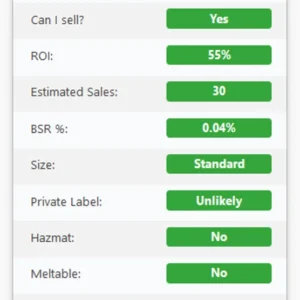
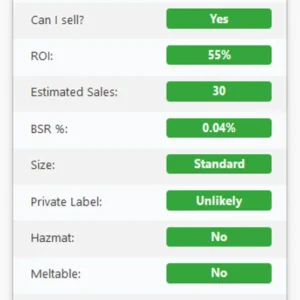
A price tracker is part of a larger ecosystem of risk management. In 2026, simply knowing the price isn't enough. You need to know if you are even eligible to sell the item or if the brand is known for filing IP (Intellectual Property) Alerts.
FBA Profit Guru combines price tracking with a comprehensive Alert System:
- IP Alerts: Warnings for brands that aggressively protect their listings.
- Meltable/Hazmat: Avoid seasonal or regulatory shipping disasters.
- Brand Restrictions: Real-time gated/ungated status checks.

Automation: The Competitive Edge
Manual research is a bottleneck. If you are spending 20 minutes manually checking Keepa charts and calculating fees on a spreadsheet, you are losing money.
In 2026, the successful sellers are those who use automated deal analysis. Tools like FBA Profit Guru allow you to set custom criteria: like a minimum $3/£3 profit or a 20% ROI: and let the software do the heavy lifting.
When you can analyze 100 products in the time it used to take to analyze 5, your probability of finding a "winner" increases by 2,000%.
Conclusion: Data is Your Only Defense
Does an Amazon price tracker matter in 2026? It’s the difference between a scalable business and a hobby that loses money.
By analyzing BSR history, monitoring competitor behavior, and accurately calculating UK VAT or US Sales Tax, you remove the guesswork. You stop "hoping" for a profit and start securing it.
Stop guessing. Start Analyzing.
Check out our full suite of features and see how FBA Profit Guru can streamline your Amazon FBA business today.