
In the world of Amazon Online Arbitrage and Wholesale, the difference between a thriving business and a failing one often comes down to one word: Returns.
As we navigate 2026, Amazon marketplaces worldwide have become more competitive, and customer expectations have never been higher. For the average seller, a 30% ROI deal looks great on paper: until a 10% return rate wipes out half your profit.
The "buy anything that looks profitable" strategy doesn't work anymore. To succeed today, you need a data-driven approach that factors in risk before you ever hit the "buy" button. This guide will show you how to identify high-risk products, protect your margins, and use FBA Profit Guru to automate the heavy lifting across marketplaces.
Why Returns Are a Global Challenge for Amazon Sellers
Every Amazon marketplace has its own quirks, but the core problem is universal: returns can destroy profit if you do not plan for them. The UK market is a useful case study because it shows how quickly marketplace-specific costs and policies can turn a good-looking deal into a weak one. In 2026, several factors have converged to make returns a primary risk for your bottom line:
- Consumer Rights Legislation: The UK has some of the most robust consumer protection laws in the world. Buyers are legally entitled to return most online purchases within 14 days for no reason at all. Amazon’s policy often extends this, and in 2026, they side with the buyer almost 100% of the time.
- High Logistics Costs: Shipping returns back to a prep center or your home is more expensive than ever. Between rising fuel surcharges and FBA removal fees, a returned item often costs you more in logistics than the original profit was worth.
- "Try-Before-You-Buy" Culture: Categories like Apparel, Small Electronics, and Beauty have seen a spike in "remorse returns": where customers buy three versions of a product and return two. For an OA seller with thin margins, this is a silent profit killer.
If you aren't accounting for these factors during your amazon deal analysis, you aren't seeing the full picture. The exact numbers may vary by country, but the margin risk is global.
The Hidden Math: How Returns Erode Your ROI in Any Marketplace
Most beginners make the mistake of looking at "gross profit." Expert sellers look at "risk-adjusted profit." Let’s look at a real-world example of how a standard 30% ROI deal can quickly turn into a loss.
For example, imagine you find a toy in the UK market:
- Buy Price: £20
- Sell Price: £40
- Net Profit (after fees/VAT): £6 (30% ROI)
If you sell 100 units, you expect £600 profit. But what happens if you hit an 8% return rate (common for toys in 2026)?
- 92 Units Sold: £552 profit.
- 8 Units Returned (Unsellable): You lose the £20 buy price + £2 shipping + £2 removal fee = £24 loss per return.
- Total Loss from Returns: 8 x £24 = £192.
- Actual Net Profit: £552 – £192 = £360.
Your effective ROI just dropped from 30% to 18%.
By using the FBA Profit Guru Profit & Fee Calculator, you can instantly see your breakeven points and margin analysis, allowing you to build a "return buffer" into every deal.
Identifying High-Risk Categories in 2026
Not all products are created equal. When performing amazon fba product research, you must categorize items by their inherent return risk.
High-Risk Categories (Handle with Caution)
- Electronics & Wearables: Compatibility issues and "technical defects" lead to return rates often exceeding 12%.
- Clothing & Shoes: High return rates due to sizing (UK sizes vary wildly between brands).
- Premium Beauty Tools: High "buyer remorse" and fraud risk (customers returning their old, broken unit in your new box).
Low-to-Moderate Risk (The "Sweet Spot")
- Durable Home & Kitchen: Items with no moving parts or electronic components.
- Consumables (Where Allowed): Once opened, these are often non-returnable for hygiene reasons.
- Standard Toys: Branded toys that don't require complex assembly generally have stable return rates of 3-5%.
How FBA Profit Guru Identifies Risk Before You Buy
The secret to scaling in 2026 is automation. You don't have time to manually check every listing for potential red flags. FBA Profit Guru was built specifically to eliminate this guesswork.
1. Real-Time Risk Alerts
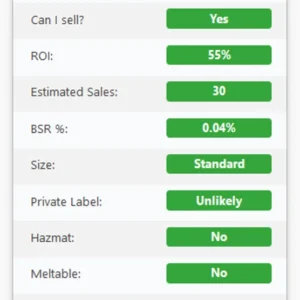
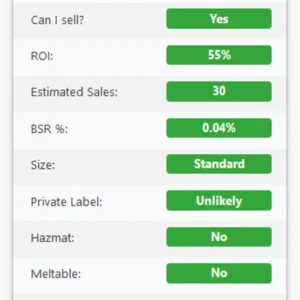
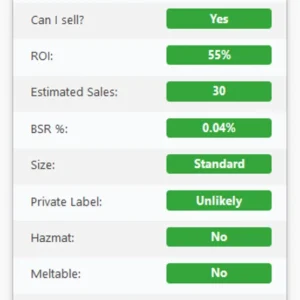
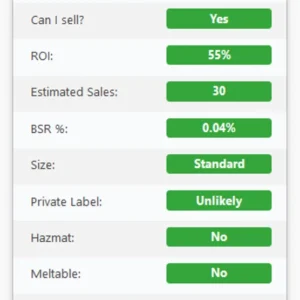
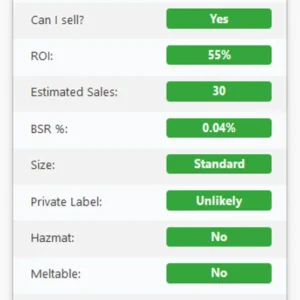
Our eligibility and alert system checks for the "silent killers" that lead to returns and account hits. Within seconds, the tool flags:
- IP Alerts: Is the brand known for filing Intellectual Property complaints?
- Hazmat Status: Is the item classified as dangerous goods?
- Meltable Warnings: Essential for the UK summer months.
- Private Label Flags: Are you trying to jump on a listing owned by a single seller who will inevitably report you?

2. Price Stability & BSR Trends
A sudden price drop usually triggers a wave of returns. Why? Because customers see the lower price after they've bought yours and "return/rebuy" to save money.
FBA Profit Guru integrates Keepa charts directly into the dashboard. You can see the 12-month history of the Buy Box. If the price is a "rollercoaster," the return risk is high. We help you find products with a "flat line" price history, ensuring your profit stays locked in.

3. Competition Analysis
If a listing has 50 FBA sellers and the price is "tanking," you are at risk. Not only will your margins vanish, but high-velocity price wars lead to disgruntled customers and higher return rates. Our tool shows you exactly how many FBA and FBM sellers are on the listing right now.
4. Deal Analysis & Fee Transparency
True profitability comes from tracking every cost, not just the obvious ones. That includes Amazon fees, VAT, removal costs, return shipping, and smaller charges like fuel surcharges that can quietly chip away at your margins.
When you're evaluating a lead, these "small" costs are exactly what distort your numbers if they are missed. A deal that looks profitable before returns can become far less attractive once extra logistics charges are included. That is why clear fee transparency matters: you need to see the full breakdown before you buy.

This is where FBA Profit Guru helps you streamline decision-making. By giving you a detailed profit and fee view, you can account for hidden costs more accurately, build a realistic return buffer, and avoid buying deals that only look good on the surface.
Practical Tips for Minimizing Returns in 2026
Beyond using the right software, you should follow these operational best practices to protect your Amazon business in any marketplace:
1. The "Exact Match" Rule
In Online Arbitrage, "close enough" is a recipe for disaster. If the Amazon listing shows a 500ml bottle and you find a 450ml bottle at a great price, do not buy it. Customers will notice, return the item as "not as described," and your account health will suffer.
2. Check for "Frustration-Free" Packaging
Items in flimsy cardboard or polybags are easily damaged during the FBA "last mile" delivery. If the packaging looks weak, expect a higher "damaged in transit" return rate. Stick to sturdy, branded boxes whenever possible.
3. Avoid "Sized" Variations Unless Margins are 50%+
If you are selling shoes or clothes, you must have a massive profit margin to absorb the inevitable 20-30% return rate. If the ROI is only 20%, you will lose money on that ASIN.
4. Use the Wishlist to Track Volatility
Before going "all in" on a new lead, add it to your FBA Profit Guru Wishlist. Watch it for 48 hours. If the price and seller count remain stable, it's a much safer bet.

Summary: Smarter Sourcing for Amazon Sellers Everywhere
Online Arbitrage and Wholesale remain powerful ways to build an e-commerce business in 2026, but the margin for error has narrowed across every Amazon marketplace. To stay profitable, you must transition from a "buyer" to an "analyst."
- Factor in a 5-10% return rate into every deal.
- Adjust for marketplace-specific costs such as VAT, return shipping, or regional surcharges.
- Focus on stable categories like Home and Toys.
- Use FBA Profit Guru to automate your risk assessment.
Stop guessing and start using data to drive your sourcing. By identifying high-risk products before they reach the warehouse, you save time, protect your account health, and most importantly, keep your hard-earned profit whether you sell in the US, UK, or beyond.
Ready to streamline your Amazon deal analysis?
Start your free trial of FBA Profit Guru today and see the difference that professional-grade data makes.
Key Takeaways for Amazon Sellers:
- Direct & Functional: Focus on the metrics (ROI, BSR, Net Profit).
- Urgency: 2026 is too competitive for manual research.
- Global Risk Mitigation: Use automated alerts and full fee visibility to avoid hidden costs, gated listings, and high-IP risk brands.