Manual sourcing is the single biggest bottleneck for Amazon sellers today. If you are still spending 20 minutes manually calculating fees, checking price history, and squinting at seller counts for a single product, you aren't running a business: you've created a low-paying job for yourself.
To scale your Online Arbitrage (OA) or Retail Arbitrage (RA) business in 2026, speed is your most valuable currency. You need to identify profitable leads, verify their stability, and pull the trigger before your competition even finishes opening their spreadsheets.
Here are 7 high-impact deal analysis hacks to help you slash your research time and scale your FBA business faster.
1. Implement the "30-Second Filter"
Most sellers waste time deep-diving into products that were never viable in the first place. You need a strict, automated first-pass filter.
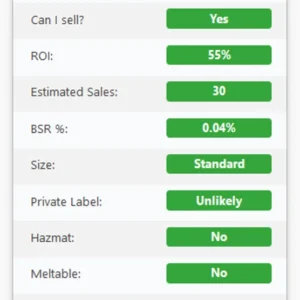
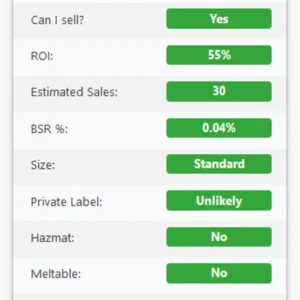
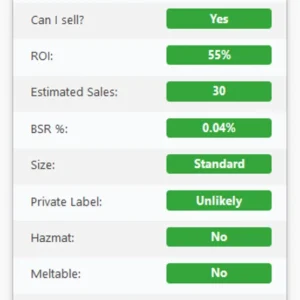
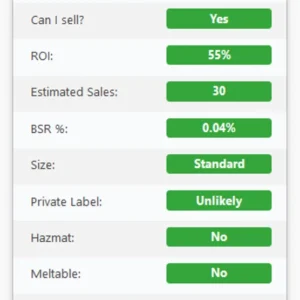
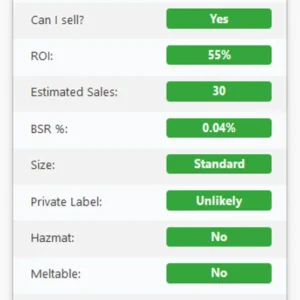
By using the FBA Profit Guru analysis tool, you can instantly see if a product meets your minimum ROI, profit per unit, and Best Sellers Rank (BSR) requirements. If the software doesn't show a "Green" score based on your custom settings, you move on immediately.
The Benefit: You stop over-analyzing "maybe" deals and focus 100% of your energy on "definitely" deals.

2. Use the 90-Day "Truth Serum"
Current Amazon prices are often a lie. A sudden price spike can make a mediocre product look like a goldmine, but that profit will vanish the moment the price reverts to its mean.
Always check the 90-day average price rather than the current Buy Box price. If the current price is significantly higher than the 3-month average, treat the deal with extreme caution. Tools like FBA Profit Guru’s price history charts show you exactly how stable the price has been over 7, 30, and 90 days.
The Benefit: You avoid buying into "fake" profits and significantly reduce your risk of holding "stranded" inventory that you have to sell at a loss.

3. Automate Your IP and Risk Insurance
Nothing kills an Amazon account faster than a Brand Registry Intellectual Property (IP) complaint. Manually checking if a brand is "IP-aggressive" is a guessing game.
You should use a system that provides real-time IP alerts and Private Label (PL) indications. Our software flags these risks instantly, alongside Hazmat and Meltable warnings. If you see a red alert, you don't even need to look at the profit: you just skip.
The Benefit: You protect your account health and avoid the "race to the bottom" often caused by brands that suddenly kick all third-party sellers off a listing.
4. Master the UK VAT & US Sales Tax Calculation
If you are selling across borders or operating in the UK, your tax status changes everything. A 20% ROI can quickly turn into a -5% loss if you forget to account for VAT (Value Added Tax) or US Sales Tax.
Instead of using a manual calculator, use a tool that lets you toggle your tax settings. For UK sellers, calculating VAT accurately is the difference between a thriving business and bankruptcy. Your analysis software should automatically deduct these costs from your net profit based on your specific tax registration status.
The Benefit: You get a real-world profit figure that includes every hidden fee and tax, ensuring your bank balance actually grows when you make a sale.

5. Analyze Competition Velocity, Not Just Count
Many beginners see 20 sellers on a listing and run away. Experienced sellers look at the Competition Analysis table.
You need to know:
- How many of those 20 sellers are FBA vs. FBM?
- Who has the Buy Box right now?
- What is the stock level of the top 5 competitors?
If the top sellers only have 1 or 2 units in stock and the monthly sales are high, those 20 sellers will be gone in 48 hours. Using a competition analysis table allows you to see the "gap" in the market.
The Benefit: You find high-profit opportunities that other sellers are too scared to touch because they don't understand the supply-and-demand dynamics.

6. Reverse-Source via Storefront Stalking
Stop starting your searches from scratch on retail websites. Instead, find a successful FBA seller and "stalk" their storefront.
When you find a seller with 50–500 reviews, you know they are likely doing Online Arbitrage. By viewing their products through your analysis tool, you can quickly find their "winners" and source them yourself. This is significantly faster than blind-searching through thousands of items on a clearance page.
The Benefit: You leverage the research of other successful sellers to build your own list of replenishables in half the time.
7. Set Hard Sourcing Criteria for Scaling
To scale, you eventually need to hire a Virtual Assistant (VA). You cannot give a VA "vibes" to source by; you need hard data.
Define your Custom Criteria Settings inside your analysis tool. For example:
- Minimum Profit: $4.00 / £3.50
- Minimum ROI: 30%
- Maximum BSR: 3%
- Minimum Monthly Sales: 20
When your VA finds a lead, the software will automatically tell them if it passes your test. This makes the transition from "solo-operator" to "business owner" seamless.
The Benefit: You remove yourself as the bottleneck, allowing your sourcing to happen 24/7 without your direct involvement.

Conclusion: Speed is the Ultimate Competitive Advantage
In the world of Amazon FBA, the seller who analyzes the most deals in the shortest amount of time wins. By moving away from manual spreadsheets and adopting a professional deal analysis suite, you eliminate the guesswork that leads to "bad buys" and "stale inventory."
Stop wasting hours on data entry. Start spending minutes on strategic decision-making.
Ready to automate your deal analysis? Try FBA Profit Guru for free for 7 days and see how much faster you can scale your Amazon business.