Amazon FBA is one of the most powerful wealth-building tools on the planet, but it is also a minefield for the unprepared. Whether you are doing Online Arbitrage, Retail Arbitrage, or Wholesale, your success depends entirely on the quality of your data.
Most sellers fail not because they don’t work hard, but because they make critical errors during the amazon fba product research phase. They rely on "gut feelings" or incomplete spreadsheets, only to realize weeks later that their "profitable" deal is actually a money-loser.
If you want to scale your business in 2026, you can't afford to guess. You need to identify these seven common mistakes and replace manual labor with high-speed automation.
1. Ignoring IP Alerts and Brand Restrictions
The fastest way to get your Amazon account suspended is to ignore Intellectual Property (IP) alerts. Many sellers find a great product, check the margin, and send it to FBA, only to receive a "Cease and Desist" from the brand owner 48 hours later.
Brands are becoming increasingly aggressive in protecting their listings. If you aren’t checking for IP alerts before you buy, you are gambling with your entire business.
The Fix: Automated Risk Alerts
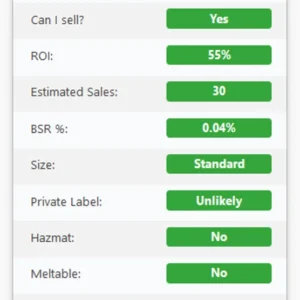
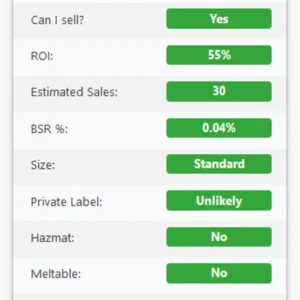
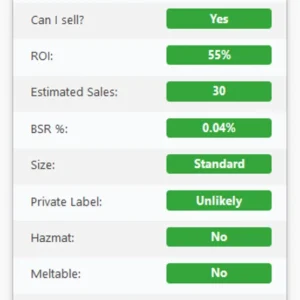
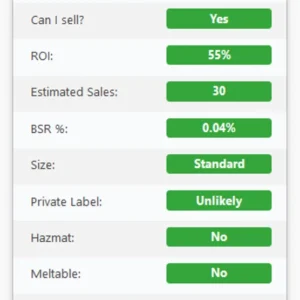
Stop checking brands manually. Use a tool that provides real-time amazon deal analysis and flags known "troublemaker" brands. FBA Profit Guru’s Restrictions/Alert System instantly checks for:
- IP Alerts: Known history of brand complaints.
- Private Label Flags: Whether a brand is likely to defend its listing.
- Gated Status: Whether you are even eligible to sell the item.

2. Miscalculating VAT and Sales Tax
Profit isn't what's left after the product cost; it’s what’s left after everything. A common mistake for UK sellers is forgetting to account for VAT on the full selling price, while US/CA sellers often struggle with complex Sales Tax nuances.
If your profit margin is 15% but you forgot a 20% VAT bill, you aren't making money, you're paying Amazon to store your products.
The Fix: Integrated Profit & Fee Calculator
You need a calculator that understands regional tax laws. Our platform provides a detailed Profit & Fee breakdown that includes:
- VAT Calculations for UK/EU sellers.
- Sales Tax for US marketplace facilitator laws.
- Referral and FBA fees calculated to the penny.
By seeing your breakeven price before you purchase, you eliminate the risk of "profit bleed."

3. Overestimating Sales Velocity (The BSR Trap)
Many beginners look at the current Best Seller Rank (BSR) and assume the product sells like hotcakes year-round. This is a snapshot, not a movie. A product might have a great BSR today because of a one-day sale, but it could be a "dud" for the other 364 days of the year.
Relying on a single data point for sales velocity leads to over-ordering and high long-term storage fees.
The Fix: Built-in Keepa Integration
To truly understand demand, you must look at historical trends. Our built-in Keepa charts allow you to visualize:
- 12-month BSR history to spot seasonality.
- Price stability to ensure the Buy Box isn't about to crash.
- Historical Offer Counts to see if the market is becoming oversaturated.
Don't buy based on where the price is today; buy based on where the price stays.

4. Missing "Hidden" Fees: Prep, Shipping, and Returns
Your spreadsheet usually includes the buy price and the sell price. But what about the £1.00 per unit you pay for polybagging? Or the shipping cost to the FBA warehouse? Or the 3% return rate typical for that category?
These "micro-costs" are the difference between a thriving business and a hobby that loses money.
The Fix: Custom Criteria Settings
Automation allows you to bake these costs into every analysis. Inside your Analysis Settings, you can define:
- Fixed Prep Costs per item.
- Shipping costs per kg/lb.
- Minimum ROI thresholds so the software automatically hides deals that don't meet your goals.
5. Ignoring Competition and "Amazon on Listing"
If Amazon is selling the product themselves, your chances of winning the Buy Box drop significantly. Similarly, if there are 40 other FBA sellers all "racing to the bottom" on price, your projected profit will evaporate by the time your stock hits the warehouse.
The Fix: Real-Time Competition Analysis
A professional arbitrage software tool should show you exactly who you are fighting. FBA Profit Guru gives you an instant view of:
- Who holds the Buy Box (Amazon, FBA, or FBM).
- Total Seller Count and their stock levels.
- FBA vs. FBM price gaps.
If Amazon is on the listing and holding the price steady, you might want to pass. If they are sharing the Buy Box, it might be a goldmine. You need the data to know the difference.

6. Forgetting Hazard and Meltable Warnings
Imagine spending £500 on a shipment of premium chocolates in June, only for Amazon to dispose of them because they are "meltable" and restricted during summer months. Or worse, having your shipment blocked because it contains Hazmat (Hazardous Materials) like lithium batteries that you aren't cleared to sell.
Manual research often overlooks these small "flags" on the listing page.
The Fix: Automated Eligibility Checks
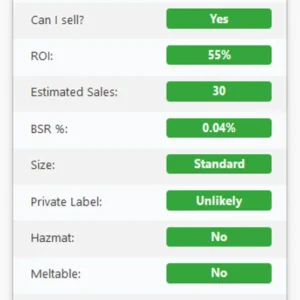
Our tool runs a background check on every ASIN for:
- Meltable Status: Critical for grocery and beauty sellers.
- Hazmat Alerts: Avoid expensive shipping blunders.
- Oversize Indicators: Prevent surprise "Heavy and Bulky" fees.
Knowing these restrictions upfront saves you hours of frustration with Seller Support.
7. The "Slow Analysis" Death Spiral
In the world of Online Arbitrage, speed is everything. If it takes you 15 minutes to analyze one deal using spreadsheets and manual calculators, you will only look at 32 products in an 8-hour day.
A pro using automation can analyze 32 products in under 10 minutes. While you are still checking the VAT, they have already bought the stock and moved on to the next lead.
The Fix: The Guru Score
We created the FBA Profit Guru Score to give you an instant "Yes/No" signal. By aggregating profit, ROI, sales velocity, and risk into a single number (0-100), you can scan dozens of leads in seconds.
Stop analyzing and start deciding.

Conclusion: Efficiency is the Only Competitive Advantage
The "Golden Age" of manual Amazon research is over. To succeed in 2026, you must stop making the same seven mistakes that kill most FBA businesses.
By leveraging amazon fba product research automation, you can eliminate the guesswork, protect your account health, and ensure every penny you spend on inventory has a high probability of returning a profit.
Ready to stop guessing and start growing? Start your 7-day FREE trial of FBA Profit Guru today and see how automated deal analysis can transform your business.
Amazon FBA Product Research FAQ
Q: What is the best ROI for Amazon FBA?
A: Most professional sellers target a minimum of 30% ROI, but this depends on your business model. Higher-turnover items can work with lower ROI if the sales velocity is high.
Q: Do I need Keepa if I use FBA Profit Guru?
A: We have Keepa charts built directly into our interface, meaning you get the world-class data of Keepa alongside our specialized profit and risk analysis without jumping between tabs.
Q: Can I use this for Wholesale?
A: Absolutely. Our tool is designed to analyze individual ASINs or barcodes, making it perfect for vetting wholesale price lists quickly.
Q: Does the software work for US and UK markets?
A: Yes! We support the USA, UK, Canada, and major European marketplaces, with specific tax calculations for each region.