Success on Amazon in 2026 isn't about finding more products; it’s about making fewer mistakes.
Whether you are scouring retail shelves for Retail Arbitrage (RA), browsing websites for Online Arbitrage (OA), or negotiating with distributors for Wholesale, your profitability hinges on one thing: your ability to analyze data quickly and accurately.
If you’ve ever bought a product only to see the price tank 24 hours later, or realized too late that you aren’t even eligible to sell the brand, this guide is for you. We are going to break down the exact framework used by top-tier sellers to evaluate deals in the US and UK marketplaces, ensuring every unit you send to FBA is a winner.
1. The Core Metrics: Beyond the Buy Price
Most beginners look at the buy price and the sell price and assume the difference is profit. This is the fastest way to go out of business. To truly understand a deal, you need to master three core metrics.
Profit & ROI (Return on Investment)
You aren’t just selling products; you are investing capital.
- Net Profit: What stays in your pocket after Amazon fees, shipping, and tax.
- ROI: The efficiency of your capital. If you spend $100 and make $30 profit, your ROI is 30%.
For OA and RA, you should generally aim for a minimum ROI of 30% and a profit of at least $3/£3 per unit to account for potential returns or minor price fluctuations.
Sales Rank (BSR) & Velocity
Profit doesn't matter if the item takes six months to sell. Use the Best Sellers Rank (BSR) to gauge demand. However, BSR is a snapshot in time. You need to look at the 90-day average BSR to understand if a product is a consistent mover or just having a "lucky" week.
Competition & Buy Box Share
If a listing has 50 FBA sellers and only sells 100 units a month, you aren’t getting 2 units. You’re getting a headache. You must analyze the competition table to see how many sellers are priced within 2% of the Buy Box.

2. Avoiding the "Race to the Bottom"
The "Race to the Bottom" happens when sellers panic and constantly undercut each other by a penny, driving the price down to the breakeven point.
Use Price Trackers (Keepa Integration)
You cannot analyze a deal without historical data. Tools like FBA Profit Guru integrate Keepa charts to show you the Price Stability over 12 months.
- Stable Price: A flat or gently oscillating line means the price is reliable.
- Downward Trend: If the price is steadily dropping while the "New Offer Count" is rising, stay away. This is a classic "race to the bottom" signal.
Monitor Seller Count
A sudden spike in the number of sellers usually precedes a price crash. If you see the offer count jump from 5 to 25 in a week, the market is about to be flooded with the same OA lead you just found.
3. Risk Management: IP Alerts and Gating
Account health is your most valuable asset. One Intellectual Property (IP) complaint can jeopardize your entire business.
Identifying High-Risk Brands
Some brands are notoriously protective. If you see a listing where the Brand is the only seller, or there is only one FBA seller who has held the Buy Box for a year, it’s a "Private Label" trap. Entering that listing will likely result in an IP alert.
Eligibility & Hazmat Checks
Before you spend a cent, check your eligibility.
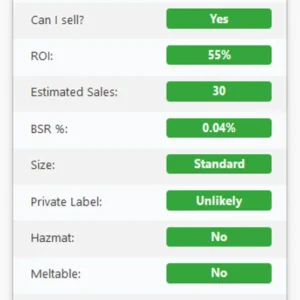
- Gating: Are you "un-gated" to sell this brand?
- Hazmat/Meltable: Is the product classified as dangerous goods or meltable (relevant for summer months)?
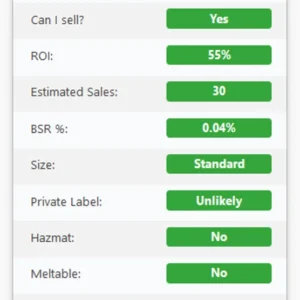
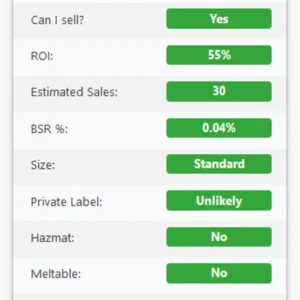
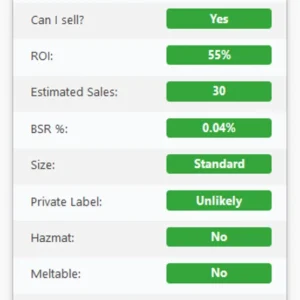
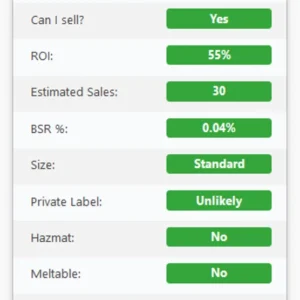
Using an automated system like the FBA Profit Guru Eligibility & Alert System allows you to see these red flags instantly, saving you from purchasing inventory you can't even ship to the warehouse.

4. UK vs. US: Navigating Regional Nuances
Analyzing a deal in Manchester is different from analyzing one in Miami. You must adjust your calculations based on the marketplace.
The UK VAT Factor
In the UK, Value Added Tax (VAT) is the silent profit killer.
- If you are VAT-registered: You can often reclaim the VAT paid on your purchases (your Cost of Goods), but you must account for the VAT Amazon collects on your behalf.
- If you are NOT VAT-registered: Your "Cost of Goods" is the full price you pay at the checkout. You cannot reclaim VAT, which often makes your margins tighter than your registered competitors.
US Sales Tax & Resale Certificates
In the US, you face Sales Tax when sourcing RA or OA. To stay competitive, you should apply for a Resale Certificate in your state. This allows you to buy inventory tax-free, instantly boosting your ROI by 6-10%. If you don't have one, that tax must be added to your total cost calculation.
5. Manual vs. Software-Led Analysis
In the early days, sellers used spreadsheets and manual calculators. In 2026, that is a recipe for failure.
The Cost of Manual Labor
Manual analysis takes roughly 5-10 minutes per product. If you analyze 20 products a day, you’ve spent over an hour just doing math. Even then, humans make mistakes: forgetting a referral fee or miscalculating shipping costs.
The Power of Automation
Software like FBA Profit Guru streamlines this into seconds. By automating the data retrieval, you get:
- Instant Fee Breakdown: Referral fees, FBA fulfillment fees, and storage costs.
- Guru Score: A data-driven rating that tells you if a deal meets your custom criteria.
- Competition Insight: Seeing exactly who you are fighting against for the Buy Box.

6. The 2026 Amazon Arbitrage Survival Checklist
Before you hit "buy" on any product, run it through this final checklist:
- Eligibility: Am I un-gated to sell this brand and category?
- IP Risk: Is there a history of IP complaints or brand dominance?
- BSR Stability: Is the 90-day average BSR within my target range?
- Profit Floor: If the price drops by 10%, am I still in profit?
- VAT/Tax: Have I correctly accounted for my tax status (UK) or sales tax (US)?
Stop Guessing, Start Analyzing
The difference between a "hobbyist" and a "professional seller" is the tools they use. You wouldn't build a house without a level; don't build an Amazon business without a comprehensive analysis tool.
By focusing on data over emotion, you can scale your Online or Retail Arbitrage business with confidence, knowing that every shipment you send is backed by hard numbers.

Ready to take the guesswork out of your sourcing? Check out our Beginner's Guide to Amazon Arbitrage or start your 7-day free trial today and see the Guru Score in action.