
Starting an online arbitrage UK business is one of the most accessible ways to build a scalable income stream on Amazon in 2026. Unlike private label brands that require thousands in upfront capital and months of product development, amazon arbitrage allows you to leverage existing brands and proven demand.
The concept is simple: buy products from UK retailers like Argos, Boots, or Tesco at a discount and resell them on Amazon for a profit. However, the difference between a struggling side hustle and a high-margin business lies in your data and your tax strategy.
In this guide, we break down the exact 5-step process to launch your business and provide a clear roadmap for navigating the complexities of UK VAT.
Step 1: Establish Your Business Foundation
Before you buy your first unit, you need a professional setup. While many beginners start as a Sole Trader for simplicity, others opt for a Limited Company to benefit from better tax efficiency as they scale.
- Register with HMRC: You must notify HMRC that you are trading. Most OA sellers start by registering for Self-Assessment.
- Open a Business Bank Account: Never mix personal and business finances. Clean data is essential for accurate amazon deal analysis later on.
- Sign Up for Amazon Seller Central: Choose the Professional Seller Plan. While it carries a monthly fee, it is mandatory if you want to use the Amazon Buy Box: the "Add to Basket" button that drives 80% of sales.
Step 2: Master the Art of Digital Sourcing
The "arbitrage" in online arbitrage uk comes from identifying price discrepancies. You aren't looking for "cool" products; you are looking for profitable ones.
Successful sourcing involves scanning UK retailers for clearance events, "3-for-2" deals, and hidden discounts. When you find a potential product, you must verify it against the Amazon listing.
What to look for during sourcing:
- Exact Matches: Ensure the EAN (barcode), size, color, and pack quantity are identical.
- Stability: Avoid products where the price fluctuates wildly. You want consistent margins.
- Competition: High seller counts can lead to "price tanking" where everyone drops their price to get the next sale.

Step 3: Implement Automated Amazon Deal Analysis
Manual calculations are the fastest way to lose money in this business. Between shipping costs, FBA fees, and referral percentages, guessing your profit is a recipe for disaster.
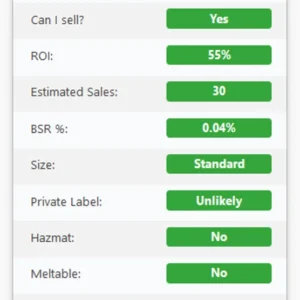
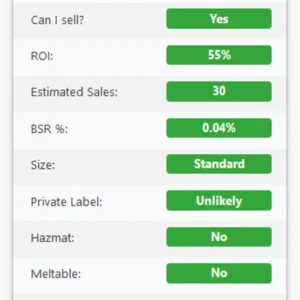
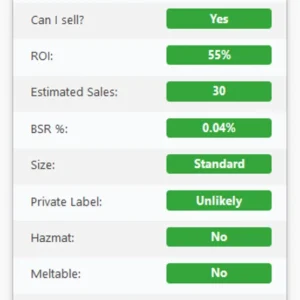
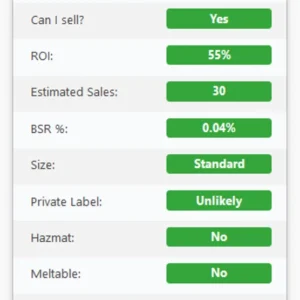
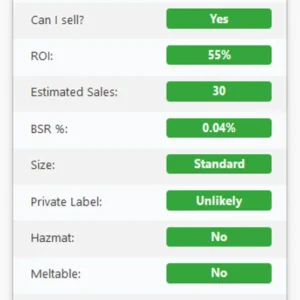
To succeed, you need professional amazon deal analysis tools. FBA Profit Guru automates this entire process. Instead of spending 20 minutes on a spreadsheet for every item, you get an instant breakdown of:
- Net Profit & ROI: Know exactly what you’ll pocket after all costs.
- Eligibility Alerts: Instant checks for brand restrictions or IP (Intellectual Property) alerts.
- BSR (Best Sellers Rank) History: See how fast the item actually sells over 12 months.
By using an automated platform, you eliminate human error and ensure that every pound you spend on stock is backed by data.

Step 4: Streamline Your Logistics with FBA
You have two choices: pack and ship items yourself (FBM) or let Amazon do it (FBA). For 99% of amazon arbitrage sellers, Fulfillment by Amazon (FBA) is the only way to scale.
- Create a Shipping Plan: Tell Amazon what you are sending in Seller Central.
- Prep Your Items: This involves covering the original retailer’s barcode with an Amazon FNSKU label.
- Ship to the Warehouse: Use Amazon’s partnered carriers (like UPS) for deeply discounted shipping rates within the UK.
Once your stock hits the warehouse, Amazon handles the storage, delivery, and customer service. This frees you up to spend more time on Step 2: finding more deals.
Step 5: Scale Through Custom Criteria
Once you understand the workflow, the goal is to stop "hunting" and start "filtering." Experienced sellers set strict criteria to ensure they only buy high-quality leads.
Using the FBA Profit Guru dashboard, you can set custom filters such as:
- Minimum £3 profit per unit.
- Minimum 30% ROI.
- Maximum 2% BSR.
This automation allows you to ignore "bad" deals instantly and focus your capital on the winners that move the needle.

Navigating VAT for UK Amazon Sellers
VAT is often the biggest source of confusion for new sellers. In the UK, the VAT registration threshold is £90,000 of taxable turnover in a rolling 12-month period.
Scenario A: You are NOT VAT Registered
If your turnover is below £90k, you don't have to register.
- Pros: You don't charge VAT on your sales, meaning you can often keep more profit per item compared to a registered seller at the same price point.
- Cons: You cannot reclaim the VAT you pay on your stock or your Amazon fees.
Scenario B: You ARE VAT Registered
You can register voluntarily at any time, and it becomes mandatory once you hit the threshold.
- Pros: You can reclaim all "Input VAT" (the VAT you pay to retailers and for Amazon fees).
- Cons: You must pay "Output VAT" (usually 20%) to HMRC on every sale you make.
How to Calculate Profits Correctly
When performing your amazon deal analysis, you must toggle your VAT status. A deal that looks profitable for a non-registered seller might be a loss-maker for a VAT-registered seller, and vice versa.
FBA Profit Guru includes a dedicated "Marketplace and Fees" setting where you can input your specific VAT status. This ensures the profit you see on your screen is the profit that actually lands in your bank account.

Conclusion: Take Action Today
The barrier to entry for online arbitrage uk is low, but the barrier to success is high-quality data. By following these five steps and leveraging automated tools like FBA Profit Guru, you remove the guesswork and build a business based on facts, not hopes.
Ready to find your first profitable deal? Check out our features and start analyzing like a pro.